Candidate Statement for the 2026 W3C TAG Election
Read the original on lea.verou.me ↗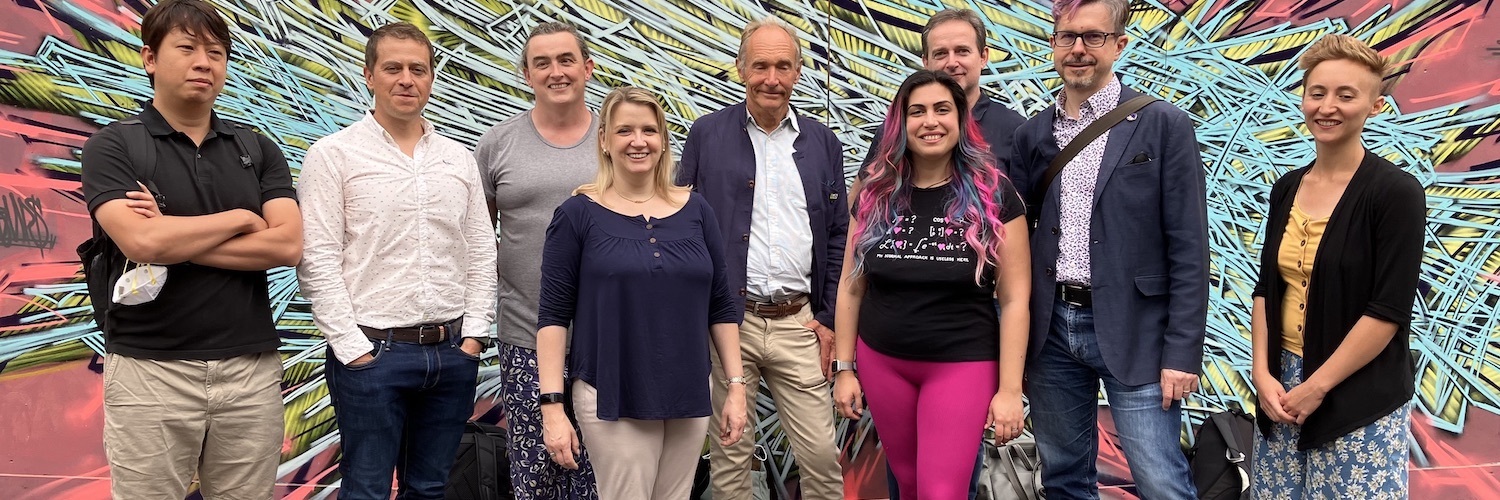
Group photo of the W3C TAG in July 2022 with me to the left of Sir Tim Berners-Lee (inventor of the Web and TAG chair emeritus). Photo credit: Dan Appelquist
I had the great honor of being elected to the TAG by the W3C membership in 2020 and again in 2022, serving two terms from 2021 to 2025. After a two-year break, this year I’m running to return, thanks to Google, Microsoft, and OpenJS Foundation pooling resources to make it possible. 💙
The W3C Technical Architecture Group (TAG) is the Working Group that ensures that Web Platform technologies are usable and follow consistent design principles, whether they are created inside or outside W3C. It advocates for the needs of everyone who uses the Web and everyone who works on the Web.
If you work for a company that is a W3C Member, please consider encouraging your AC rep to vote for me! (Ask me if you don’t know who that is)
My candidate statement follows.
I’m Lea, and I’m running to return to the TAG, where I served two terms from 2021 to 2025. It was some of the most fulfilling work of my career. The only reason I did not run in 2024 is that the job takes hundreds of hours a year, which as an independent I could not sustain pro bono. This year, in recognition of my service, Google, Microsoft, and the OpenJS Foundation have pooled resources to fully fund my participation, so I can finally commit the time the job deserves while remaining independent.
My work spans the entire web platform: 14 years in the CSS Working Group, active participation in TC39 and WHATWG, two decades of building for the web, and open source running on millions of websites. In 2025 the OpenJS Foundation recognized my overall impact on the web platform with its Pathfinder for Standards Award. That breadth is exactly what the TAG requires.
With a PhD in Human-Computer Interaction from MIT and a 20+ year career that includes entrepreneurship and product leadership, I combine academic rigor and big-picture perspective with pragmatism, an eye for hard tradeoffs, and a deep commitment to user needs. And as a bilingual Greek woman, I bring a Mediterranean and European perspective and firsthand appreciation of the Web’s internationalization needs. For more on my background, see my 2020 and 2022 candidate statements.
In my four years on the TAG, I worked to direct the group’s limited time towards maximizing impact: I co-led the Web Platform Design Principles, turning previously implicit design knowledge into published guidance that improves consistency across the platform and helps reviews scale, started the Web Platform Gaps initiative to find what the platform is missing, served as liaison to TC39 to keep JavaScript and Web APIs consistent, and participated in hundreds of design reviews, becoming the TAG’s go-to reviewer for API design.
But I believe the TAG can, and should, do more.
The Web is changing rapidly, and reactive review is no longer enough. The TAG is uniquely positioned to see the platform as a whole, yet it mostly encounters features after their architecture has taken shape, sometimes even after they ship. By then, consequential decisions are difficult to change. Who identifies gaps that span multiple working groups? Who sketches the big cross-cutting solutions, or decides which layer a problem belongs in when that is non-obvious? Individual groups see their own slice, and the sum of several low-level views is not the big picture. The result is architectural debt.
I want the TAG to help shape the architecture of the Web, not just review it. To proactively identify gaps, sketch coherent, composable solutions, and then bring the relevant working groups into the conversation to develop and standardize the pieces within their scope. Not to take over their work, but to provide the cross-cutting architectural perspective that no individual group is positioned to offer.
Expanding the gap analysis work I began last term is the first step, and my work since then has given me a much richer evidence base to draw from. I am one of the people leading Modern Web Guidance, a multi-vendor project teaching AI coding agents to use the modern web platform effectively and follow best practices. This work involves reviewing implementation instructions for a broad range of use cases, ensuring they reflect the best the modern Web has to offer. This makes the many ways the web platform still falls short incredibly salient, revealing systemic gaps that are easy to miss when looking at web features in isolation.
The biggest change since my last term is that a growing share of the code targeting the web platform is written by AI agents, and a growing share of the Web is consumed by them. The TAG should treat this as an architecture question and answer it with principles and evidence, not enthusiasm or alarm. Many of the principles that make APIs robust and usable for humans also benefit agents, but the differences expose new tradeoffs that deserve careful architectural attention. And none of this changes what the Web is for: user agency, privacy, accessibility, and interoperability apply no matter who, or what, writes the code, and defending them is the TAG’s job.
I am not employed by a browser vendor or a big tech company, and my funders do not direct, approve, or veto my positions. I remain free to disagree with any of them, in public, on any proposal. My only agenda is a web platform that lives up to its potential and remains owned by no one. I’ve spent four years helping the TAG improve the Web. I want to help it shape the Web’s future, and for the first time, I have the resources to see it through.
I would like to thank the OpenJS Foundation, Google, and Microsoft for fully funding my TAG participation in the event that I am elected, and OpenJS Foundation and Bocoup for partly funding it during my previous terms.